What the Weather Here Does to It
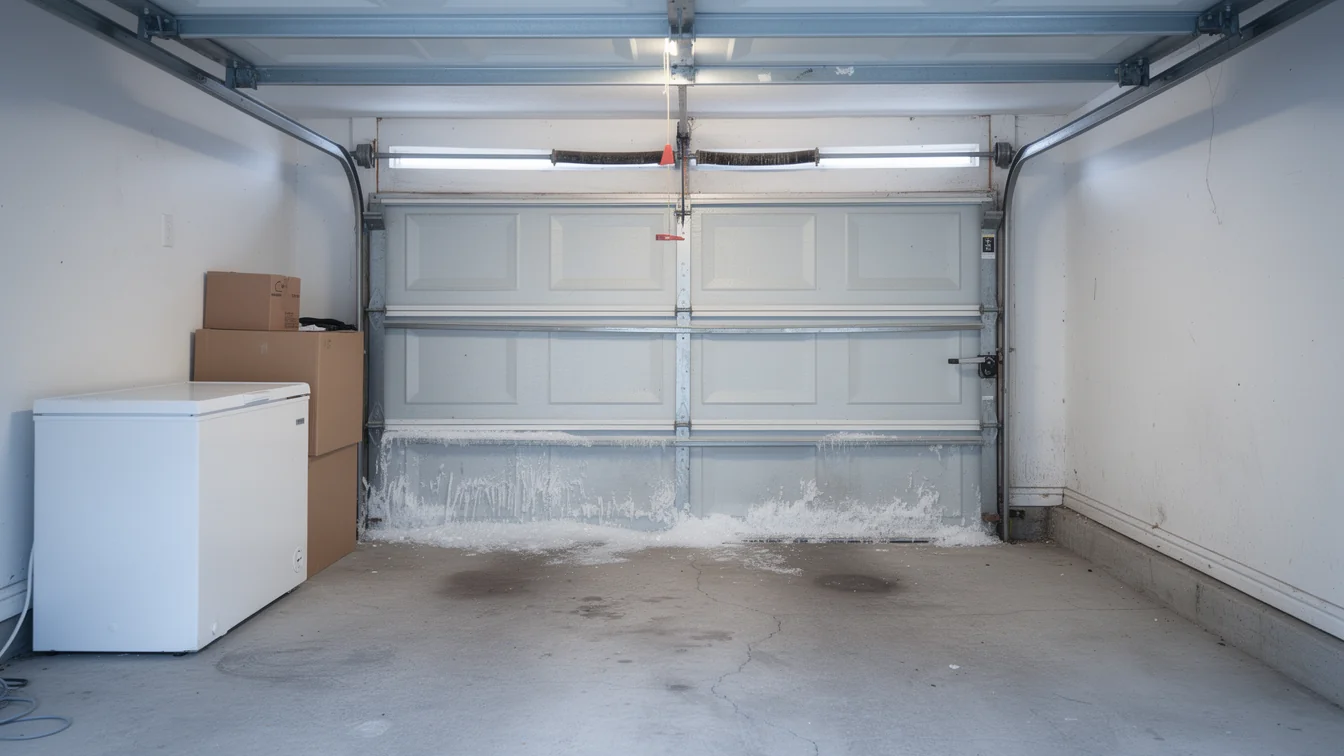
Hagerstown sits in a cold, severe winter band, and that matters more to a garage door than most homeowners expect. Steel panels contract in the cold and expand again once the sun hits them, and that cycle works on the seams, the hinges, and the weatherstripping every single day from November through March. Torsion springs lose tension faster in cold weather than they do in a mild climate - the metal stiffens, the coil doesn't flex the same, and a spring rated for a certain number of cycles gets there sooner. Grease that was fine in August turns to a thick paste by January and makes the opener work harder than it should to lift the door, which shows up as a slow start or a motor that strains before it ever gets moving.
On a service call here, we're checking lubricant condition first, because the wrong grease or none at all is behind a good share of the cold-weather calls we get. We're also looking at the bottom seal, since a gap there lets wind straight into the garage and that's often the actual complaint, even when the customer calls it a door problem.
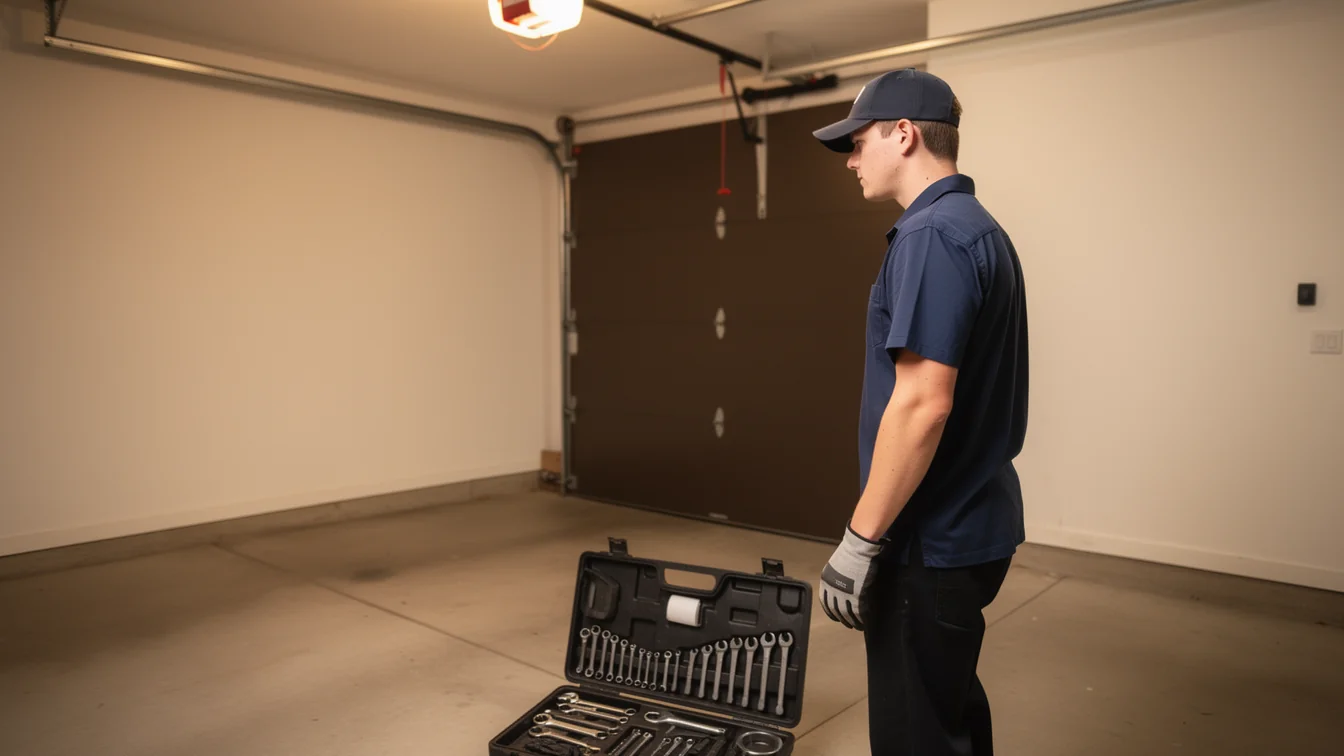
The Situation
Most of the housing across this service area went up between 1949 and 1998, with the median build year landing around 1985. That's not one era of construction - it's roughly fifty years of it, stacked across twenty named communities from Funkstown two miles out to Brownsville eighteen miles away, with Halfway, Paramount-Long Meadow, Fountainhead-Orchard Hills, and Robinwood all sitting inside a three-mile ring. A service call in a 1950s section of town is a different job than one in a 1990s subdivision, even though both get called 'garage door repair.'
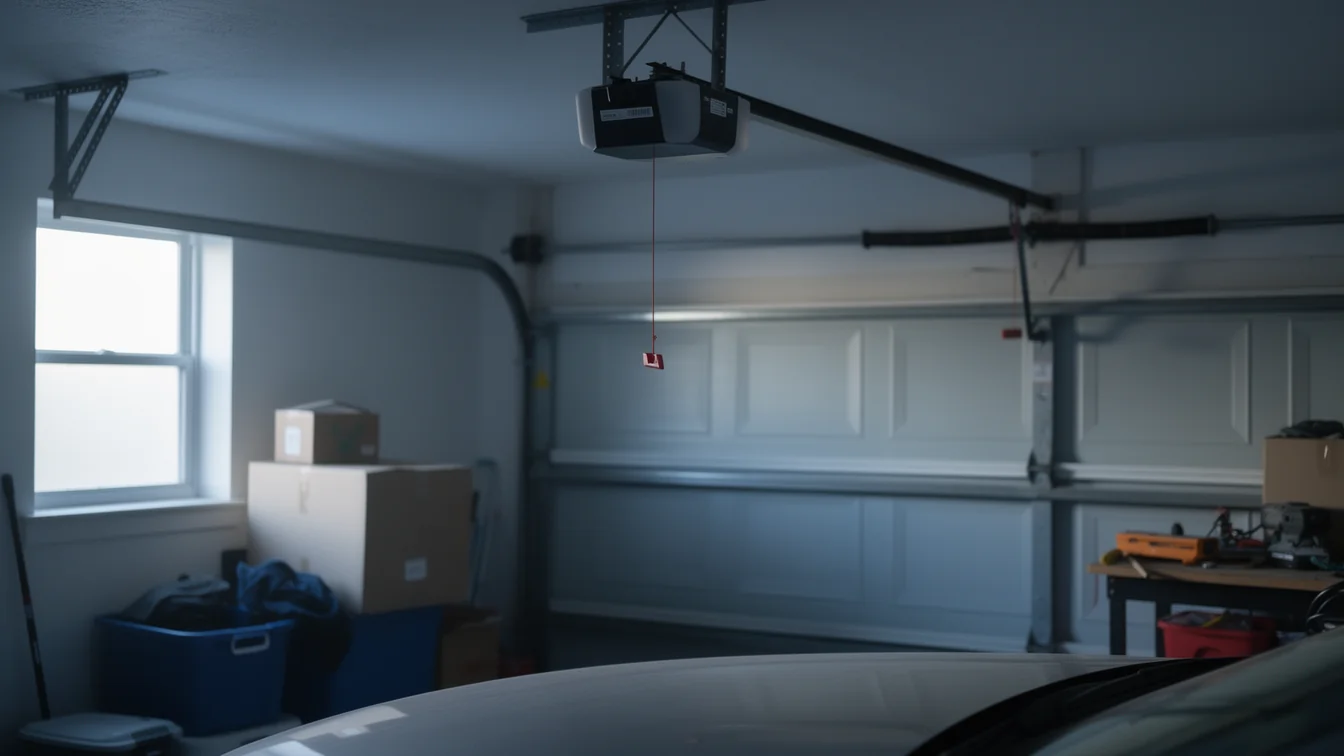
The bulk of that stock, though, is 1980s and 90s construction, which means chain-drive openers from the first wave of residential automation, galvanized torsion springs sized to builder-grade doors, and tracks mounted to framing that's had thirty-plus years to settle. With 12,991 owner-occupied houses across the area, a lot of that original hardware is still in service, just older than the people calling us about it. A call usually starts with figuring out which generation of parts we're actually looking at before we touch anything.
Leaving It Alone
A door that's slow to lift or scraping on one side isn't an emergency, so it's easy to let it ride through a winter. In this climate that's usually a mistake, because cold makes small problems move faster. A frayed cable that would last another year in a mild climate can let go on a sub-freezing morning when the steel is stiff and the spring is already working harder than normal. A roller with a worn bearing binds up more in the cold, and that extra resistance gets passed straight to the opener's gears.
We also see houses in the older end of the 1949-1998 range where the original hardware was never upgraded, and age plus cold is a worse combination than either one alone. None of this means every noise is urgent. A door that opens a little slower than it used to but runs smooth and quiet otherwise can usually wait for a scheduled visit instead of an emergency call. The honest answer is that waiting costs more in this climate than in a milder one, but it doesn't always cost you the whole job.
What Most People Get Wrong
The most common mistake we see is spraying a household lubricant, like WD-40, on springs and tracks and calling it maintenance. In a cold climate that thin lubricant washes off or thickens wrong, and it doesn't do what a proper silicone or lithium grease does for a torsion spring working through freezing temperatures. The second mistake is assuming a door's age tells you everything - a house built in the median year of 1985 might have a replaced opener from five years ago paired with original 1985 springs, and treating the whole system as one age group leads to the wrong diagnosis.
People also tend to assume a stuck door in winter is a broken spring, when just as often it's ice or stiff grease at the bottom seal or the rollers. We're not going to sell a spring replacement on a service call if the real issue is the lubricant. That said, a repair isn't always the better move - once an opener from the 1980s or 90s wave has multiple parts failing at once, matching new components to that old chain-drive system usually costs more over time than putting in a new one.
Talk to a local pro
Garage door trouble in Hagerstown?
Same-day service with honest, upfront quotes.