What the Weather Here Does to It
Hagerstown sits in a cold-severe climate band, and that matters more for your opener than for almost any other part of the door. Chain-drive and screw-drive units from the 1980s and 90s rely on grease that thickens as temperatures drop. Add a hard freeze and the nylon drive gear inside an older opener head can bind or strip trying to pull a cold, stiff door off a cold, stiff track. Most of the housing stock in this service area dates from 1949 to 1998, with the bulk built in the 1980s and 90s, so a large share of the openers still running are old enough to have the original motor and the original gear - not the sealed, cold-rated units sold today. Winter storms here also bring power cuts, and an opener with no battery backup is just dead weight on the ceiling until the lines come back. That combination - an aging motor and no backup power - is the local problem, not a generic one.
The Situation
Across this service area there are 24,611 households and 12,991 owner-occupied houses, most of them built during that same 1949-1998 stretch. A lot of those houses still have the opener that came with the house, or close to it. When a storm knocks out power on a night that's already below freezing, two things happen at once: the motor loses its supply, and the door itself is harder to lift by hand because cold grease and cold metal add resistance to every roller and hinge. Homes in the nearby communities - Funkstown, Halfway, Paramount-Long Meadow, Robinwood, and the dozen or so other areas within a few miles of Hagerstown - share this same housing age and the same exposure, which is why we see the same opener complaints across all of them, not just in one neighborhood.
Leaving It Alone
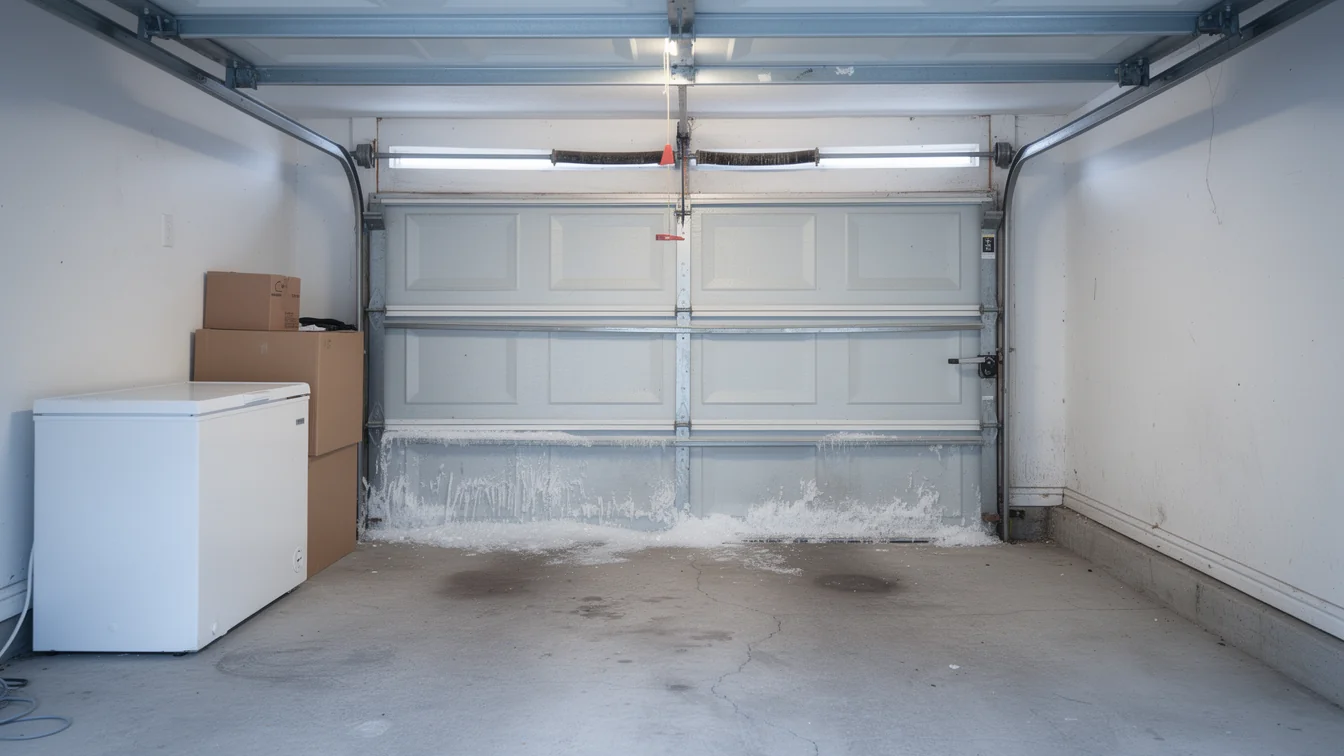
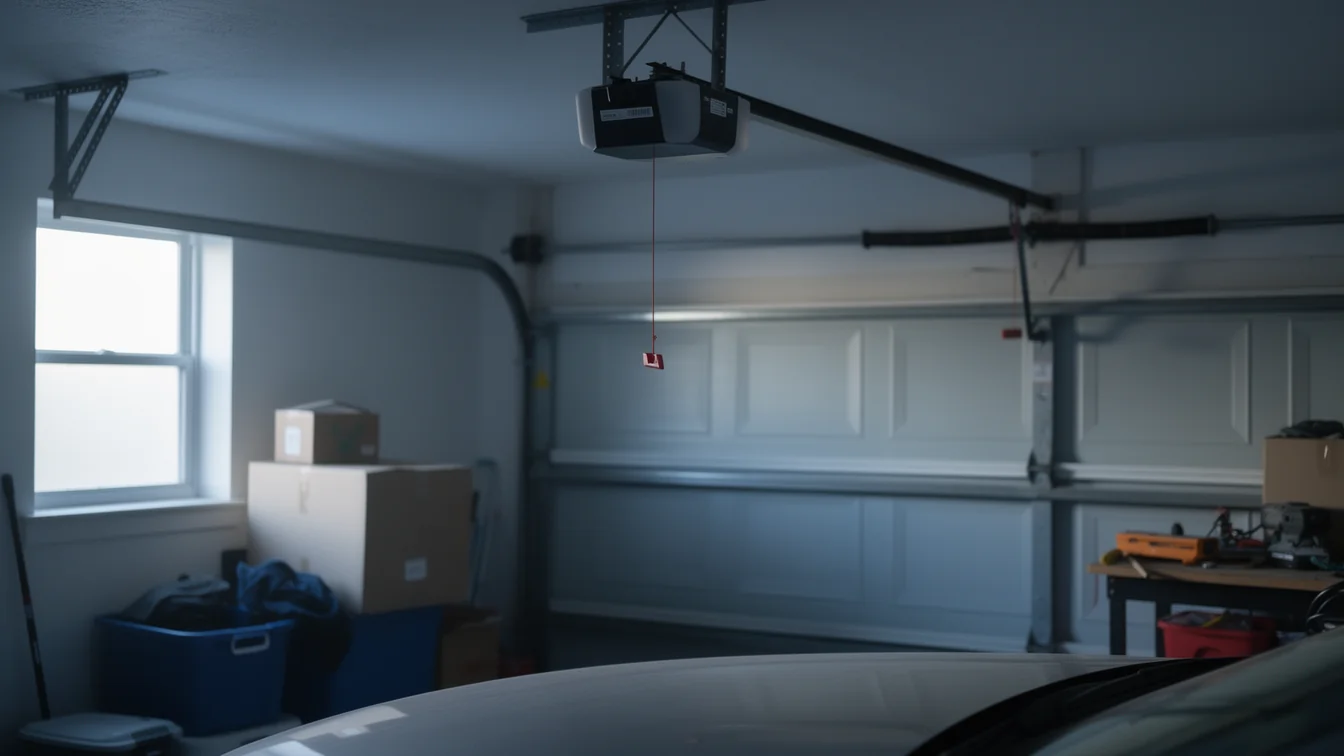
An opener that's struggling in the cold doesn't usually just stop one day - it reverses partway, grinds, or trips the breaker, and most people keep using it anyway because it still technically works. Left alone through a few more winters, the motor runs hotter trying to push past the resistance, and that shortens its life faster than normal use would. If a power cut hits while the opener is already weak, you can end up with a door that won't release by hand either, because the emergency release cord depends on the trolley being able to move freely - and a gummed-up track in freezing weather doesn't move freely. At that point you're not dealing with a power problem anymore, you're dealing with a stuck door and a car you can't get out.
What Most People Get Wrong
The most common mistake is assuming the manual release always works, no matter what. It's built for emergencies, but it still depends on a trolley that slides easily on the rail, and in a Hagerstown winter that rail can be coated in old, thickened grease that fights the release just as hard as it fights the motor. People also replace a dead opener with whatever's cheapest without checking that it matches the spring and track setup already on a house from this era - a mismatch doesn't fail right away, it fails the first cold night it's tested hard. One honest limit here: we don't rewire your home for a permanent backup generator, that's an electrician's job, not ours. What we can do is match the opener to the door you actually have and make sure the release mechanism works when you need it, not just when it's warm out.
Talk to a local pro
Garage door trouble in Hagerstown?
Same-day service with honest, upfront quotes.